

Ask almost any East Texas homeowner what frustrates them most about their yard, and drainage is near the top of the list. Heavy clay soil, frequent downpours, and flat or low-lying areas combine to create one of the region’s most common — and most persistent — landscape problems.
Standing water isn’t just a cosmetic issue. Left unaddressed, it can damage lawns, kill plants, invite pests, and eventually threaten foundations and hardscapes.
Why East Texas Drainage Is So Tricky
Much of the Lufkin and Nacogdoches area has soil with a high clay content. Clay holds water — which is great for nutrient retention, but poor for drainage. When heavy rain hits, water sits on top rather than soaking in quickly. Combined with flat lots, gentle slopes toward houses, and frequent summer storms, it’s a recipe for soggy yards.
Signs You Have a Drainage Problem
Some drainage issues are obvious. Others sneak up over time. Common signs include:
- Puddles that linger more than 24 hours after rain
- Squishy, spongy spots in the lawn
- Grass that thins or dies in low areas
- Mosquito problems in specific parts of the yard
- Water stains on siding, fencing, or foundation walls
- Erosion near downspouts or along slopes
- Moss or algae growth in shaded, damp areas
Any of these is a signal that water isn’t moving through the property the way it should.
Why Ignoring Drainage Gets Expensive
Drainage problems rarely fix themselves. More commonly, they slowly get worse. Soil compacts further in chronically wet areas. Roots rot. Lawn damage spreads. Over time, drainage issues can contribute to much bigger problems — foundation movement, pavement cracking, landscape loss, and pest infestations.
The earlier a drainage issue is corrected, the less expensive and invasive the fix tends to be.
Common Drainage Solutions
Regrading and Slope Correction
Sometimes the most effective solution is also the most straightforward: adjusting the slope of the yard so water flows away from the house and problem areas. Proper grading is the foundation of nearly every drainage fix.
French Drains
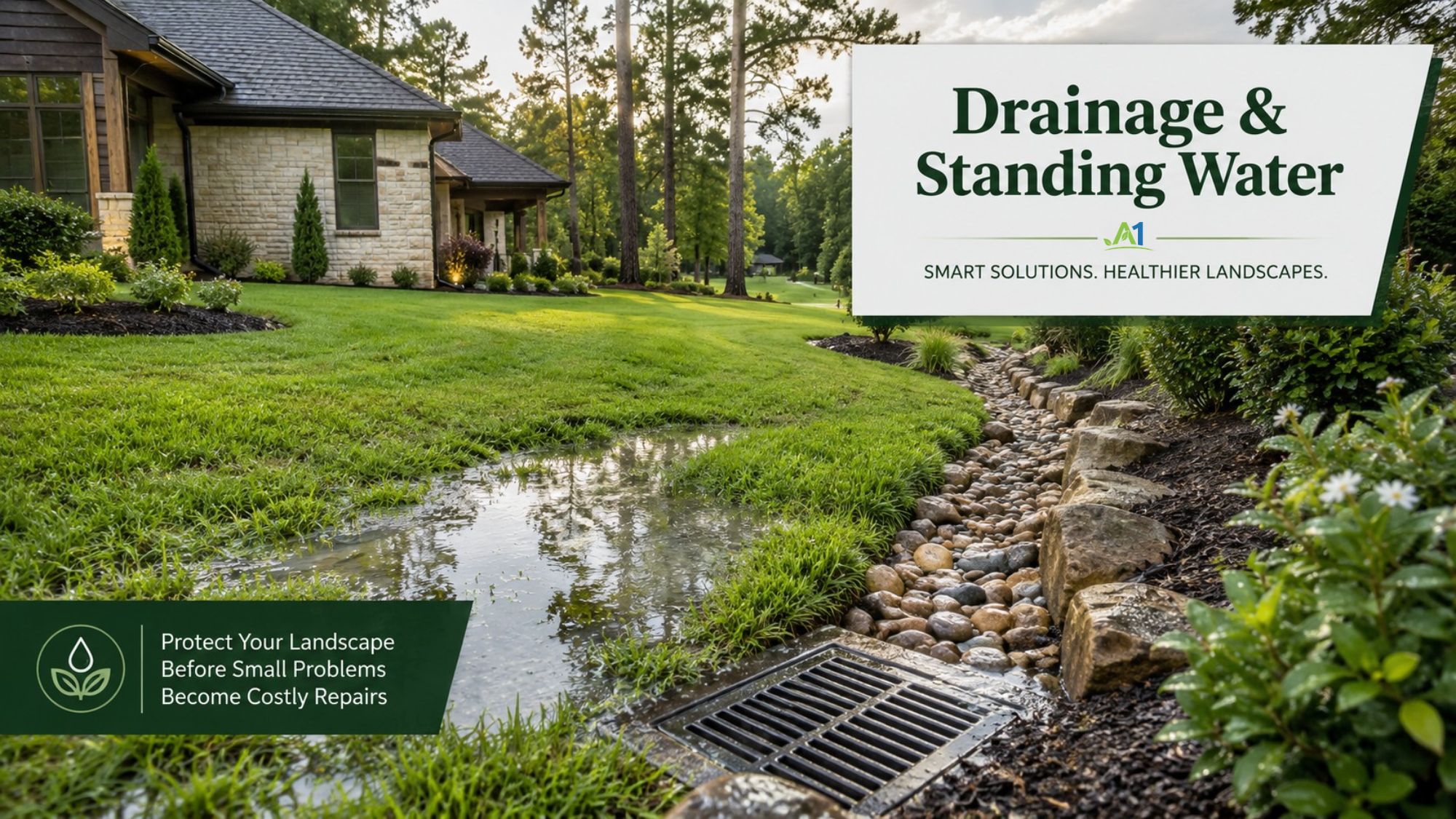
A French drain is a gravel-filled trench with a perforated pipe that collects and redirects water underground. French drains are especially useful in flat yards or areas where surface solutions alone aren’t enough.
Surface Drains and Catch Basins
For spots that collect water at the surface — patios, low areas, driveway edges — catch basins and surface drains can capture water and route it through underground piping to a safer discharge point.
Downspout Extensions
One of the simplest improvements on many properties is extending downspouts so they discharge well away from the foundation. Short or broken extensions dump huge volumes of water right against the house.
Swales and Dry Creek Beds
A well-designed swale or dry creek bed can move water away from problem areas while adding visual interest to the landscape — a functional and attractive solution.
Soil Amendment and Bed Design
In flowerbeds, improving soil structure and adjusting bed height can dramatically reduce standing water issues. Raised beds, better mulching, and correct plant selection for wetter areas all help.
Drainage Is Part of Landscape Design
Good drainage isn’t separate from good landscaping — it’s part of it. The best East Texas landscapes are designed with water movement in mind from the start. Even existing landscapes can often be updated to solve drainage problems without sacrificing beauty.
The Bottom Line
If your yard stays soggy, your plants keep dying, or water pools where it shouldn’t, those are problems worth solving. Drainage fixes protect your landscape, your home, and your long-term investment in your property.
A professional drainage evaluation can identify the real source of the problem and offer solutions that actually last — not quick fixes that fail the next time it rains.
A1 Lawn & Landscape proudly serves Lufkin, Nacogdoches, and surrounding East Texas communities.
📞 Call 936-635-0555 for a free estimate.
Rooted in Faith. Growing in Service.
Author: Billy Forrest