Flowerbed Refresh: What You Can (and Shouldn’t) Do Before Spring Arrives
February 20, 2026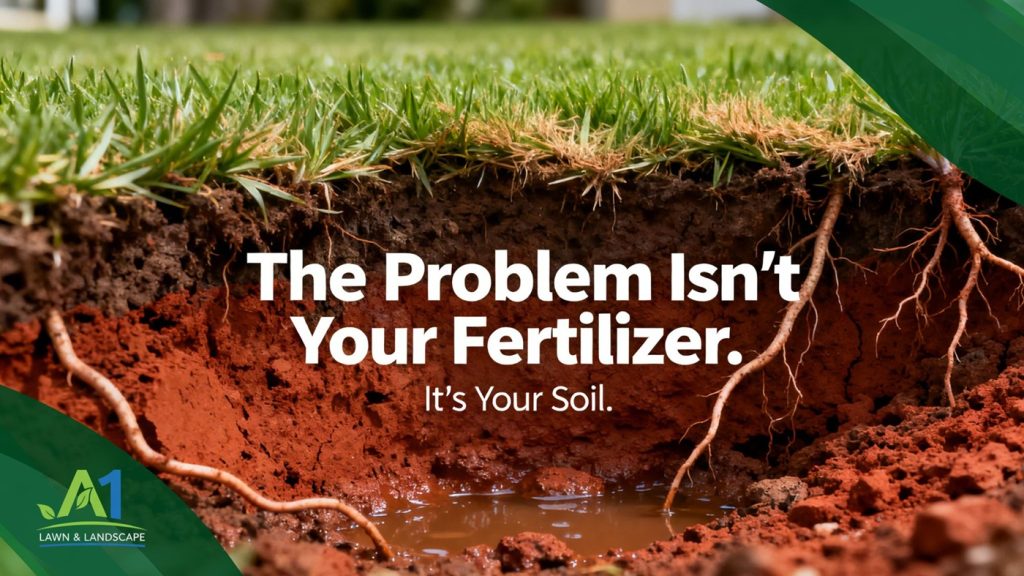
When lawns struggle in East Texas, fertilizer is often the first thing homeowners reach for. While nutrients are important, fertilizer alone can’t overcome poor soil conditions. In fact, soil health plays a far greater role in lawn success than any product applied above the surface.
Understanding your soil is one of the most overlooked—and most important—steps in maintaining a healthy lawn.
Why Soil Matters More Than Fertilizer
Grass roots rely on soil for water, oxygen, and nutrients. If soil is compacted, poorly drained, or lacking organic matter, fertilizer can’t do its job effectively. Nutrients may wash away, become unavailable to roots, or promote weak surface growth without strengthening the lawn.
Healthy soil creates the foundation that allows grass to grow thick, resilient, and competitive against weeds.
The Challenges of East Texas Soil
Much of East Texas is dominated by heavy clay soil. While clay can hold nutrients well, it often struggles with:
- Poor drainage
- Compaction
- Limited oxygen flow to roots
These conditions can lead to shallow root systems, water pooling, and increased stress during hot or dry periods.
Compaction: The Silent Lawn Killer
Soil compaction is one of the most common issues affecting East Texas lawns. Foot traffic, mowing equipment, and natural settling compress soil over time. Compacted soil restricts root growth and limits the lawn’s ability to absorb water and nutrients.
Without addressing compaction, fertilizer results are often disappointing.
Building Better Soil Takes Time
Improving soil health isn’t a one-time fix. Practices such as proper mowing, controlled traffic, organic matter management, and targeted treatments help soil structure recover gradually.
When soil improves, lawns respond with stronger roots, better color, and increased resistance to weeds and stress.
Fertilizer Works Best With Healthy Soil
Fertilizer is most effective when applied to soil that can support absorption and root development. In healthy soil, nutrients reach the root zone and contribute to long-term lawn strength rather than short-lived growth spurts.
The Bottom Line
A great lawn starts below the surface. While fertilizer plays a role, soil health ultimately determines how well grass grows and how resilient it remains throughout the year.
If your lawn struggles despite regular fertilization, soil conditions may be the missing piece.
A1 Lawn & Landscape proudly serves Lufkin, Nacogdoches, and surrounding East Texas communities.
📞 Call 936-635-0555 for a free estimate.
Author: Billy Forrest